




Automation in Vietnam’s coatings industry is gradually emerging as an area of investment as coatings and paint manufacturers increasingly modernize their production lines, improve productivity, strengthen quality control and optimize operations.
Rather than relying solely on forecasts about the automation market, actual investments and projects in Vietnam show that automation technologies are already being implemented in coatings manufacturing plants and production lines related to coatings.
At the same time, Vietnam’s development direction toward smart manufacturing, digital transformation and industrial modernization is creating further opportunities for automation solutions to be applied more extensively across production.
Vietnam’s Coatings Industry Faces Growing Demand for Technology Upgrades
Vietnam’s coatings industry has experienced significant changes in recent years. According to information shared by the Vietnam Paint and Printing Ink Association (VPIA) at Coatings Expo 2024, 2023 was a challenging year for the industry, with decorative coatings production estimated to have declined by 23% compared with 2022.
Amid increasing competition and cost pressures, technology innovation and production efficiency have become important areas of focus for businesses. Industry experts and companies have discussed the need to invest in automated production lines, modern machinery and solutions that can help optimize production costs. VPIA has also identified technological innovation as one of the important issues receiving attention from the coatings and printing ink industry community.
This provides a practical basis for examining the role of automation in the next stage of the industry’s development.

Vietnam’s Coatings Manufacturing Plants Are Investing in Automation
One of the most important bases for assessing the opportunities for automation is not general Industry 4.0 forecasts, but projects that have already been implemented in practice.
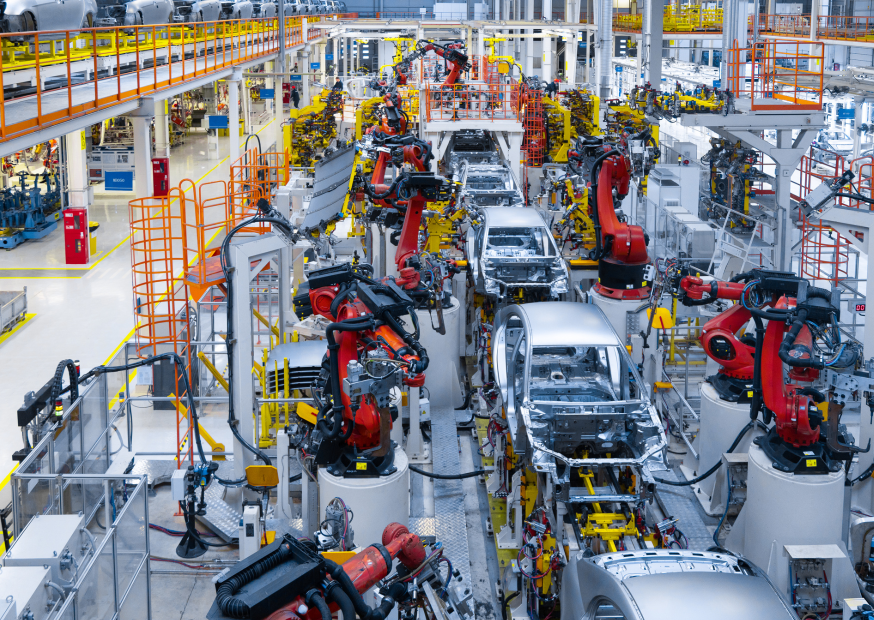
AkzoNobel: Control Systems and Process Instrumentation at a Coatings Plant
At the AkzoNobel Coatings plant in Dong Nai, a project involving Electrical & Control Installation, PLC & Process Instrumentation was implemented.
The project scope included the installation of control systems, process instrumentation, MCC panels, control cabling, as well as engineering and commissioning for the Plant Control System.
This provides direct evidence that PLC, process instrumentation and plant control are not new concepts for coatings manufacturing plants in Vietnam.
S’Hanoi: Moving Toward Automated Production Lines
Another example is S’Hanoi’s second factory project in Hung Yen. According to information about the project, the company invested in modern European production lines with a focus on higher levels of automation, reduced manual labor, fewer errors, and improved accuracy, production capacity and product quality.
This is a notable example because automation is directly linked to specific production objectives:
Reduce errors → Improve accuracy → Increase capacity → Enhance quality
Becker Industrial Coatings: PLC Integrated into a New Plant Design
Another project announced by TTCL Vietnam is the new plant of Becker Industrial Coatings (Vietnam) in Binh Duong.
The project has a designed capacity of 18,000 tonnes of solvent-based coatings per year and includes a PLC Control system as part of the plant’s electrical, control and technical infrastructure.
The plant was also designed with VOC treatment, waste treatment, compressed air, chilled water and other infrastructure systems supporting coatings production.
This example shows that automation in the coatings industry is not limited to individual pieces of equipment but can be integrated from the design and construction stages of a new manufacturing plant.
Automation in the Coatings Industry Is More Than Just Robotics
When people talk about automation, robots are often the first technology that comes to mind. However, for coatings manufacturing plants, the scope of automation is much broader.
Solutions can include:
- PLC control systems
- Process instrumentation and control equipment
- Automatic raw material dosing
- Automated mixing and dispersion
- Automated grinding processes
- Temperature, pressure and viscosity control
- Automated filling systems
- Packaging automation
- Testing and quality control systems
- SCADA systems for monitoring and data acquisition
- Manufacturing Execution Systems (MES)
- Industrial Internet of Things (IIoT)
- Automated warehouses
- Data analytics and Artificial Intelligence
Each company can adopt a different level of automation depending on its scale, products, existing production lines and investment objectives.
Therefore, market opportunities are not limited to building fully automated factories. They also include upgrading individual processes within existing manufacturing facilities.
From Process Automation to Smart Manufacturing
A factory does not necessarily need to undergo a complete transformation all at once.
A company can begin with a specific process, such as automated raw material dosing. The system can then be connected to mixing, production control and quality management processes.
The development pathway can be illustrated as:
Automation → Equipment Connectivity → Data Collection → Analysis → Process Optimization → Smart Manufacturing
Once sufficient data has been collected, manufacturers can monitor the entire production process of a batch, from raw materials and formulations to operating parameters, quality inspection results and finished products.
This is particularly important for the coatings industry, where consistency between production batches has a direct impact on product quality.
Smart Manufacturing Is Becoming a Direction for Vietnam’s Industrial Development
The opportunity for automation in Vietnam’s coatings industry is also part of the broader transformation of the country’s manufacturing sector.
According to the Ministry of Industry and Trade of Vietnam, approximately 90% of manufacturing and processing enterprises have implemented some form of digital solution, around 35% have adopted robots and sensors in production, while approximately 10–12% have reached Smart Factory 3.0 maturity. These figures refer to the manufacturing and processing sector as a whole, not specifically to the coatings industry, but they indicate that technology adoption within Vietnam’s manufacturing environment is increasing.
The Ministry of Industry and Trade has also issued Decision No. 2708/QD-BCT in 2025 on a program to promote smart manufacturing and digital transformation across sectors under the Ministry. The program aims to develop a smart manufacturing platform, build a pool of experts, and establish standards and indicators to support digital transformation through 2030 and further expansion through 2035.
Therefore, automation in the coatings industry is developing within an industrial environment with a clearer direction toward digitalization, automation and smart manufacturing.
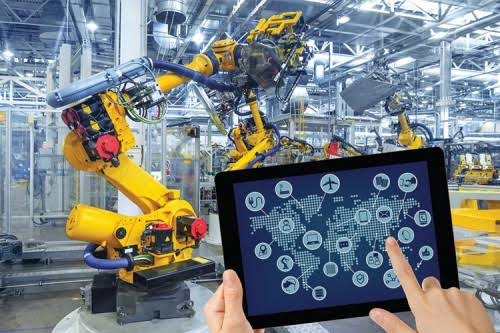
What Opportunities Are There for Technology Suppliers?
Based on actual projects and Vietnam’s manufacturing development direction, several solution groups can be identified as having potential to serve coatings manufacturers.
Process Automation
Control systems, PLCs, instrumentation and process control solutions.
Dosing and Mixing
Automated weighing, material feeding, mixing and dispersion solutions designed to improve production accuracy and consistency.
Quality Control
Instrumentation, sensors and monitoring systems that enable manufacturers to track critical production parameters.
Filling and Packaging
Automated systems that help control filling accuracy, increase productivity and reduce dependence on manual operations.
Production Data Management
SCADA, MES and data management solutions that connect equipment with production management activities.
Automated Warehousing and Material Handling
Automated warehouses, material handling equipment and inventory management solutions that can optimize post-production operations.
Smart Manufacturing Solutions
Once equipment and data infrastructure are connected, manufacturers can further adopt data analytics, Artificial Intelligence and other advanced technologies.
Coatings Expo Vietnam 2027 – Connecting Technology with Manufacturing Needs
As Vietnam’s coatings industry continues to modernize, the need to connect coatings manufacturers with suppliers of machinery, equipment, automation technologies and production solutions is becoming increasingly important.
Coatings Expo Vietnam 2027 will take place from 23–25 June 2027 at SECC, Ho Chi Minh City, bringing together companies across the coatings, color, specialty chemicals, printing ink, raw materials, machinery, equipment, testing and production technology sectors.
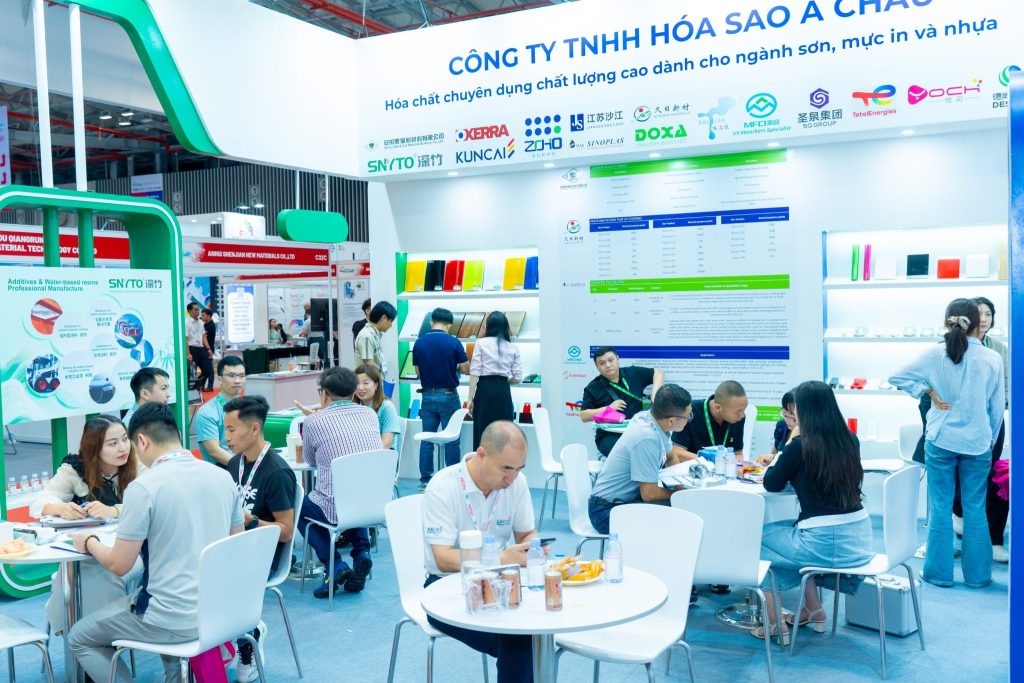
The exhibition provides a platform for technology suppliers to showcase new solutions for the industry, ranging from process automation, instrumentation, control systems, mixing, grinding, filling and packaging to production data management and smart manufacturing.
From automating individual processes to building smart factories – the modernization of Vietnam’s coatings industry is creating new opportunities for technology and solution providers.
